Claims and Injuries
Car and Truck Accident Claims in Mississippi
What to preserve after a Mississippi crash, how fault and comparative negligence apply, and how uninsured motorist and commercial trucking claims differ.
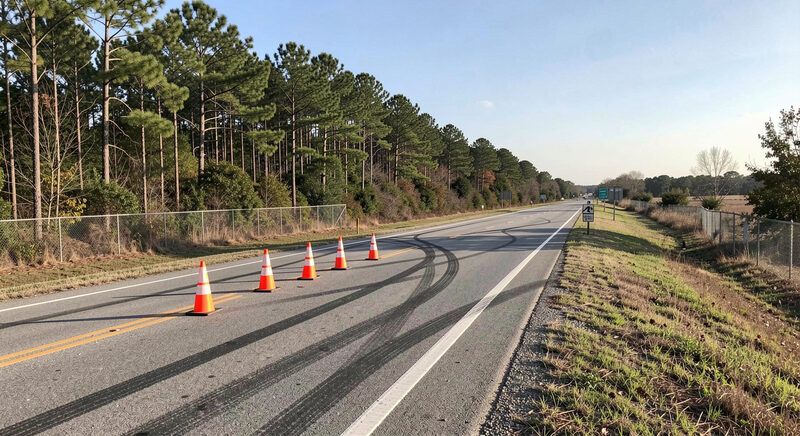
A crash on a Mississippi road produces two problems at once: a factual question about what happened, and an insurance question about who pays. The two are related, but they are answered by different rules, and a claimant who treats them as one problem usually loses time on the second while arguing about the first.
The first hours after a crash
What is done in the first hours after a collision shapes the case more than anything that happens later. A police report creates an official record of the scene, and the officer's observations, including any citation issued, become evidence. Photographs of the vehicles, the road and the injuries preserve detail that fades quickly, and skid marks, debris and traffic controls are gone within days. Witness names and contact details are worth collecting at the scene, because a witness who moves away is effectively lost.
Medical treatment matters for two reasons. It documents the injury, and it establishes that the harm was serious enough to seek care. A gap in treatment is one of the most common arguments a defence raises, and it works because a jury expects a genuinely injured person to keep seeing a doctor.
Fault and the comparative rule
Mississippi applies pure comparative fault under Mississippi Code section 11-7-15, so a driver found partly responsible for a crash still recovers, with damages reduced by that share. Rear-end collisions, left-turn accidents and intersection crashes each carry their own arguments about fault, and a defendant will often concede some negligence while disputing the percentage. Because the percentage directly reduces the award, the fight over fault is often the whole case. The rule and its arithmetic are explained in Personal Injury and Comparative Fault in Mississippi.
Which insurance pays first
Mississippi is a fault-based state for auto liability, which means the driver who caused the crash is responsible for the harm, and that driver's liability insurer generally pays the claim. The motor vehicle provisions of the Mississippi Code set the statutory duties that a crash case is built on. In practice, a claimant may also turn to their own policy. Medical payments coverage pays medical bills regardless of fault, up to a stated limit. Uninsured motorist coverage applies when the at-fault driver has no liability insurance, and underinsured motorist coverage applies when the at-fault driver's limits are too low to cover the loss.
Uninsured and underinsured claims are contractual: the claimant must satisfy the terms of their own policy, including prompt notice and cooperation. A claimant who settles with the at-fault driver without the insurer's consent can jeopardise the underinsured claim, which is why the sequence of settlements matters.
Commercial trucks are different
A crash involving a tractor-trailer or a delivery vehicle brings in federal safety rules, corporate defendants and records that a private driver does not generate. Commercial carriers are regulated, and they keep driver qualification files, hours-of-service logs, maintenance records and electronic data from the engine. That data can show speed, braking and the driver's time behind the wheel in the minutes before impact.
The value of those records is also why they disappear quickly. Many carriers retain electronic data for a limited period, and a spoliation letter sent early is the standard way to demand preservation before the trail goes cold. Cases against carriers may also involve more than one defendant: the driver, the carrier, a broker, a maintenance contractor or the shipper.
Damages in a vehicle case
Damages include the medical bills, the lost income, the damage to the vehicle and, where the injury is lasting, the loss of future earning capacity and the cost of future care. Non-economic damages cover pain and the effect on daily life. Mississippi law caps non-economic damages in certain categories of case, and punitive damages require clear and convincing proof of a higher degree of culpability. Property damage is usually handled separately and often settled early, and a claimant should be careful not to sign a release that covers the injury claim as well.
The three-year clock
The general limitation period in Mississippi is three years under Mississippi Code section 15-1-49, running from the date of the injury. Where the injury is latent, the discovery rule can postpone accrual, but a crash injury is usually apparent at once, so the clock starts on the day of the collision. Claims against a government entity, such as a city or county vehicle, run on one year with a ninety-day notice requirement, and that shorter period catches claimants by surprise.
When the insurer refuses to pay
An insurer that denies a valid claim or delays payment without a reasonable basis can face a bad faith claim, which may support extra-contractual damages and, in a serious case, punitive damages. That body of law is set out in Insurance Coverage Disputes and Bad Faith.
If the claim becomes a lawsuit
Most vehicle claims settle before a complaint is filed. When they do not, the case follows the route described in How a Civil Case Moves Through Mississippi Courts, with discovery focused on the crash records, the medical history and the insurance policies. The wider set of claim types is indexed in Mississippi Civil Claims and Practice Areas.